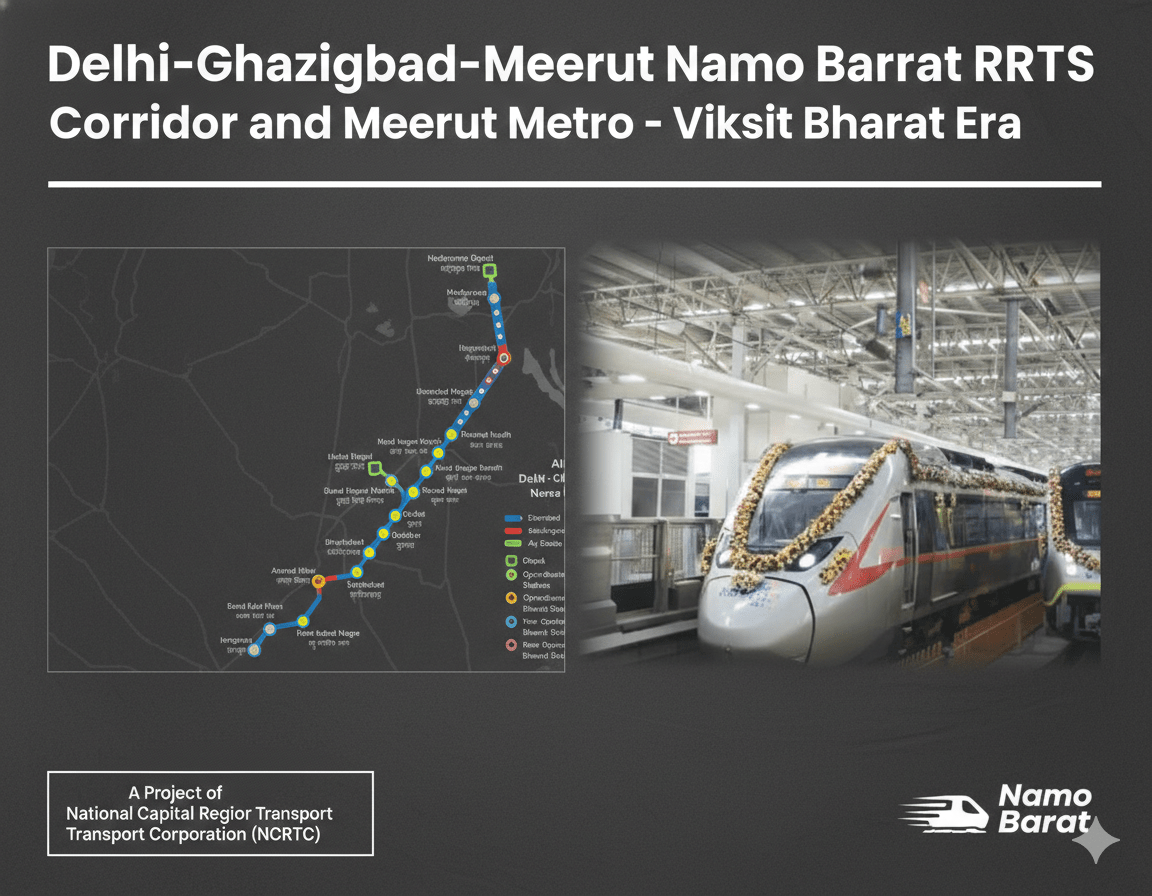
Hi! So, now you are aware that India has the Delhi Ghaziabad Meerut Namo Bharat RRTS Corridor and Meerut Metro. Yes, India too got its place on the Time scale in February 2026 when the Delhi to Meerut corridor of the new Namo Bharat RRTS (Regional Rapid Transit System) Route from Delhi to Meerut was inaugurated by Hon PM Shri Narendra Modi, and he flagged offthe Metro from Meerut.
Yes, yes, I know Kolkata Metro is lauded in the corners of India for its creativity and expansiveness, but our capital knows how to throw a punch as well. The good news is that with advances in both technology and planar transport, the experience just keeps getting better! Our Cs are enjoying safe, comfortable, and time-saving rides with their friends throughout the town and its environs with additional services and new works.
We are not inaugurating an infrastructure, we are changing the way in which economic and social life is being conducted, as well as the transportation system of our country. In this post, we will know about the reasons why this Meerut Metro and this corridor play a game changer not just for residents of India but also for travel.
Assessments of the liveability of any city infrastructure need to be made with a full people-first focus, which better travel connectivity enables us to achieve.
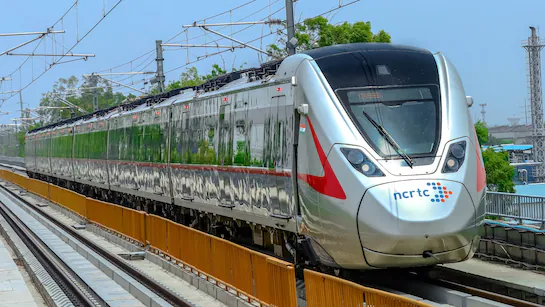
Facts about Delhi-Ghaziabad-Meerut Namo Bharat RRTS Corridor and Meerut Metro
Below are things you should know about the Delhi-Ghaziabad-Meerut Namo Bharat RRTS Corridor and Meerut Metro:
| Category | Detail |
| Metro Project Name | Delhi Ghaziabad Meerut Namo Bharat RRTS Corridor and Meerut Metro |
| Total RRTS Corridor Length | 82 kilometers |
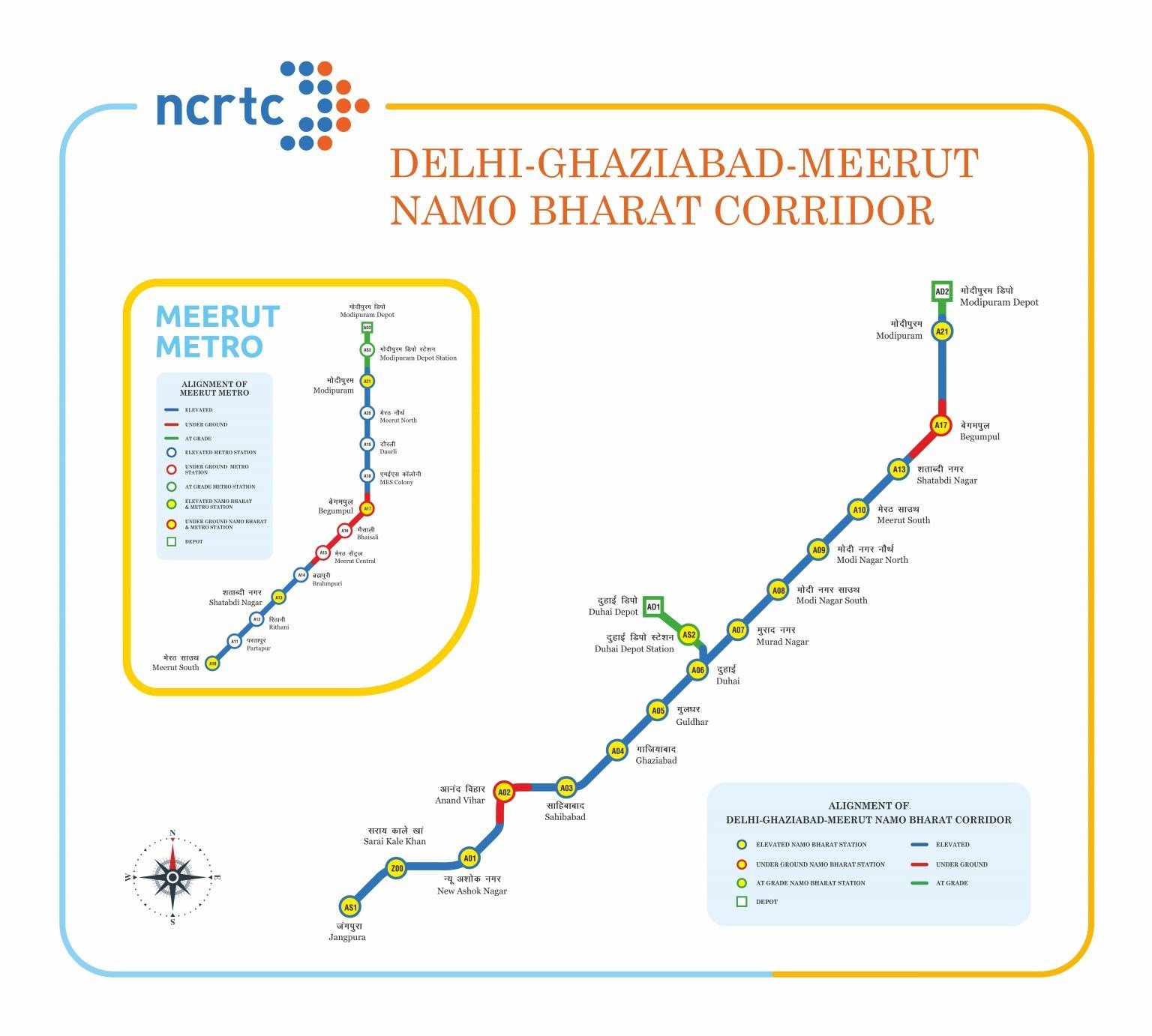
| RRTS Metro Route | Sarai Kale Khan (Delhi) to Modipuram (Meerut) |
| Key New Sections Added | Sarai Kale Khan to New Ashok Nagar (~5 km); Meerut South to Modipuram (~21-23 km) |
| Inauguration Date | February 22, 2026 (by Prime Minister Narendra Modi) |
| RRTS Operational Status (pre-inauguration) | Partial sections (e.g., ~55 km from New Ashok Nagar to Meerut South) are operational, also full 82 km becomes operational post-inauguration |
| Meerut Metro Length | 23 km (Phase 1) |
| Meerut Metro Route | Meerut South (Partapur Tiraha) to Modipuram |
| Meerut Metro Stations | 13 stations |
| Meerut Metro Travel Time | Approximately 30 minutes (Meerut South to Modipuram) |
| RRTS Maximum Speed | 160 km/h (operational); design speed 135-180 km/h in sources |
| Meerut Metro Maximum Speed | 120 km/h (fastest metro in India) |
| Delhi to Meerut Travel Time (RRTS) | 50-58 minutes (reduced from historical ~3 hours) |
| Train Composition | Three-coach trains, stainless steel body |
| Passenger Capacity | Over 700 passengers (173 seated) |
| Key Train Features | Air conditioning, CCTV, USB ports, regenerative braking (energy-efficient), reserved seats for women/senior citizens/disabled, universal access (wheelchair spaces, luggage racks, platform screen doors) |
| Train Frequency (current) | Every 15 minutes; planned every 10 minutes when fully operational |
| Control Centre | Central Operation Control Centre at Duhai, Ghaziabad |
| Depot Facilities | Modipuram depot (special facilities for Metro) |
| Daily Ridership (partial operations) | Over 60,000 passengers on the existing ~55 km route |
| Expected Daily Ridership (full corridor) | Over 100,000 passengers |
| Cumulative Ridership (since launch) | Over 5 million (as reported in earlier phases) |
| Additional Notes | Meerut Metro shares infrastructure with RRTS, the fifth metro network in Uttar Pradesh; it emphasizes safe, eco-friendly, and modern rapid transit |
Namo Bharat RRTS Corridor: Route and Length
The entire length of Delhi-Ghaziabad-Meerut Namo Bharat RRTS corridor is 82 km. It originates in Sarai Kale Khan, Delhi and terminates in Modipuram, Meerut. This line has new interlines including:
- Sarai Kale Khan to New Ashok Nagar (about 5 km)
- Meerut South to Modipuram (about 21 km)
One interesting part about it is that even the Meerut Metro will be using these fixed structures. There will be around 21-23 km of Meerut Metro for intra-city travel.
Meerut Metro: Stations and Connections
The Meerut Metro has 12-13 stations, which connect important areas of the city. Main Route:
- Meerut South (Partapur Tiraha) to Modipuram
This connection will speed up travel in Meerut city and make intra-city travel for passengers just 30 minutes.
Speed and Travel Time
Namo Bharat trains are capable of running at a maximum speed of 160 km/h, although the design speed is 135 km/h.
Meerut Metro will run at a maximum speed of 120 km/hr, making it the fastest metro in India. It will surpass the previous 110 km/hr Delhi Airport Express Line.
Travel time:
- Delhi to Meerut: 50-58 minutes
- Meerut Metro (Meerut South to Modipuram): Approximately 30 minutes
This has reduced the historically 3-hour journey to less than an hour.
Train Features
Namo Bharat and Meerut Metro trains are equipped with modern technology.
Key Features:
- Three-coach train, stainless steel body
- Energy-efficient regenerative braking
- 700+ passenger capacity (173 seats)
- Air conditioning, CCTV, USB ports
- Reserved seats for women, senior citizens, and the disabled
- Universal access with a luggage rack, a wheelchair, and a platform screen door
Frequency and Operation
Currently, the train frequency is every 15 minutes. Once fully operational, it will run every 10 minutes.
Control system:
- Central Operation Control Centre: Duhai, Ghaziabad
- Special facilities at the Modipuram depot for Metro
This technology ensures that passengers get a safe, timely, and convenient journey.
Passenger Count and Impact
Currently, 60,000+ passengers are travelling daily on the 55 km running route. Once the entire corridor is opened, it will be more than 1,00,000+ passengers. Total ridership has crossed 5 million since its launch in 2023.
Social and Economic Impact:
- Improvement of Delhi-Meerut connectivity
- Road travel time reduced from 3 hours to less than an hour
- Increase in economic and social activities in Meerut
- Known as the fifth metro network in Uttar Pradesh
National Importance
This project is not just a transport development, it is part of the bigger picture of the country. By creating a fast, safe, and eco-friendly transport system, it is strengthening economic connectivity between cities.
- Encouraging industrial and business expansion
- Reducing the pressure of urbanization
- Growing employment and tourism
This is an example that modern infrastructure is not just about mobility, but is key to the overall development of the country.
Technological Innovation and Safety
Advanced technology has been used in NaMo Bharat and the Meerut Metro.
- Central control system with full route monitoring
- Advanced CCTV monitoring
- Emergency preparedness security system
- Modern train design that consumes less energy
These ensure that passengers not only enjoy a fast but also a safe and comfortable journey.
Passenger Experience
Passenger convenience is at its best.
- Faster journey, shorter journey to the destination
- Comfortable seats and air conditioning
- USB port for selfies and social media
- Special facilities for women, senior citizens, and the disabled
This experience has raised the standard of passenger services in the country.
Future Prospects
Namo Bharat and Meerut Metro are ready to meet not only the current but also the future needs.
- Faster urban and regional connectivity
- Model of rapid transit systems in other cities
- New ideas and innovations in urban development
It has set a new standard for modern rail and metro systems in the country.
Conclusion
The Delhi-Ghaziabad-Meerut Namo Bharat RRTS corridor and Meerut Metro are not just infrastructure project, it has opened new horizons in the social, economic, and transport system of the country. This fast, safe, and technology-based project has brought convenience and development to the lives of the citizens of the country. It is a lesson not only for Uttar Pradesh but the whole country on how modern-day rail and metro systems can enhance urban and regional agreements. With this project, people become not just time savers but participants in the economic and social growth of their country right in front of their eyes.